
Shopify migration services
Switch platforms without losing rankings
What does a Shopify migration include?
A Shopify migration moves an existing store onto Shopify. Squadkin Technologies Pvt. Ltd. has two public examples: Casa Di Luce, from Magento, and EcoWoodRings, from a custom cart.
The work is a plan, then the data the source store can export: products, variants, collections, customers, and orders when that export exists. The storefront is rebuilt as a Shopify theme. Apps replace functions the old platform handled outside the theme. Old URLs are mapped to new ones with redirects. Metadata is moved when the export contains it. Redirects do not promise that rankings stay the same.
Who it is for: a merchant leaving Magento or a custom cart.
This is not a new store with an empty catalog. That brief is Shopify development. The rebuilt storefront is Shopify theme development. Stores that are staying on Magento use Magento development.
If the destination plan is Shopify Plus, checkout work is described on Shopify Plus development.
A longer article already exists: a step-by-step migration guide.
What is moved
Only items the source store can export, and only the pieces agreed in the scope.
Catalog
Products, variants, collections, and the product content the export contains.
Customers and orders
Customer records and order history when the source platform provides them.
URLs
A redirect list from old URLs to the new Shopify URLs, so existing links have a destination.
Theme
The storefront is rebuilt on a Shopify theme. It is not a file-for-file copy of the old platform’s theme.
Apps and integrations
Apps that replace functions the old platform handled outside the theme. A named integration is included only when that project’s page names it.
How a migration runs
Inventory the current store
Catalog size, apps, checkout rules, and the URLs that receive traffic.
Map the data
Decide what moves, what is rebuilt, and what is left behind.
Build and test
Theme, replacement apps, a trial import, and a check that products, customers, orders in scope, and the redirect list match the map.
Launch
Turn on redirects, review the pages that were agreed, and cut over in a window the merchant chooses.
Projects like yours
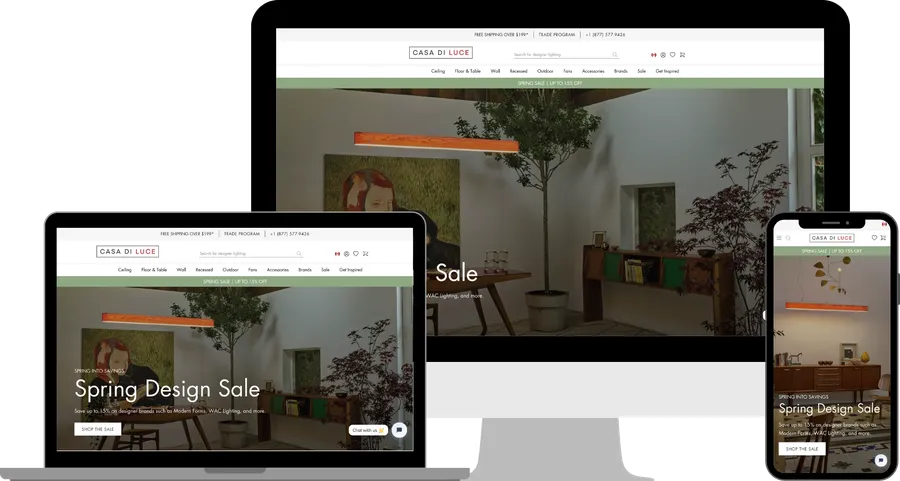
Casa Di Luce
3,000+ lighting products moved from Magento 2 to Shopify, with Google rankings kept
- 3,000+
- products moved from Magento to Shopify
- Kept
- Google rankings through the migration
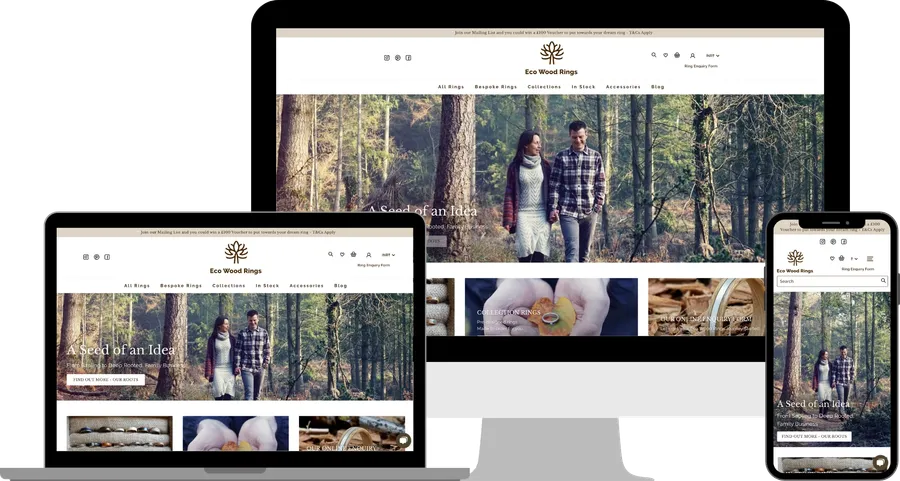
EcoWoodRings
Moved from a custom PHP cart to Shopify, with prices shown in every shopper's currency
- All products
- transferred without any data loss
- Multi-currency
- prices by country
Good to know
What does Shopify migration include?
Planning, product and customer data, order history when it can be exported, a Shopify theme, replacement apps, redirects, and a launch check.
How long does a Shopify migration take?
It depends on catalog size, custom features, and how much of the theme is rebuilt. Squadkin sets the timeline after reviewing the current store. The published case studies do not list a duration.
Will SEO stay the same?
Old URLs are mapped to new ones with redirects, and page metadata is moved when the export contains it. That does not promise that rankings will stay the same.
Do you migrate Magento stores?
Yes. Casa Di Luce is the public Magento-to-Shopify example. Stores that are staying on Magento use Magento development.
What do you deliver with store migration?
Switch platforms without losing rankings. It is part of our eCommerce work, and every project gets a written plan and a fixed scope before any build starts.
How does a store migration project work?
We start by learning about your business and goals, then send a clear plan and a fixed scope. We design and build in stages with your feedback, test on real devices, launch, and stay on hand for updates and help.
Which technologies do you use for store migration?
We usually work with Shopify, Magento and PHP, and pick the stack that fits your product, team and budget.
Have you done store migration for other businesses?
Yes. Related projects include Casa Di Luce and EcoWoodRings. Each case study on this page shows the challenge, what we built and the result.
Need help with store migration?
Tell us what you're working on. We'll reply within one business day with ideas and a free quote.